Most buying guides point you at whatever is on the shelf this month. This page is for the opposite instinct — the devices that never got a wide release, went out of production years ago, or existed for one strange limited run and then vanished.
Some of these are genuinely good readers that simply lost the market fight. Others are curiosities worth knowing about even if you never own one. Where we can, we have linked somewhere you might actually find one — but supply is unpredictable by nature. That is rather the point.
Kobo Aura One Limited Edition (32GB)
The standard Aura One shipped with 8GB in 2016 — plenty for text, tight for manga or a PDF habit. In late 2017 Kobo quietly released a 32GB “Limited Edition”, sold only in the United States and Japan, aimed at readers with serious manga collections. It holds roughly 700 volumes.
It was never a headline product — no redesign, just the storage bump — which is probably why so few sold at the time and why so few surface secondhand now. Worth knowing: the Limited Edition is visually identical to the standard model. Check the listing for 32GB explicitly; sellers frequently do not know what they have.
Sony Librié EBR-1000 (2004)
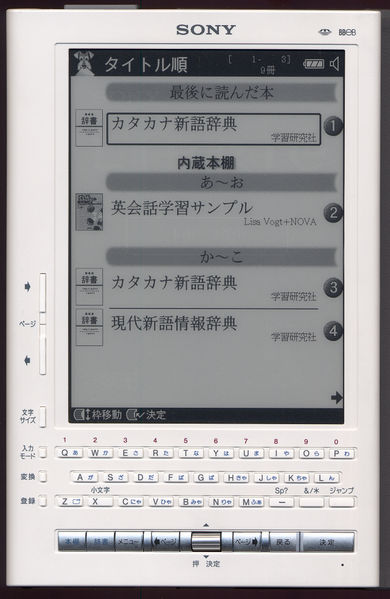
The first E Ink e-reader ever sold. Japan only, never a Western release, and running the same underlying screen technology every modern reader still depends on — three years before the first Kindle.
Owning one is not about practicality. The device is ancient by any sensible measure and the software was hostile even when new. It is about holding the actual beginning of the category.
Amazon Kindle, 1st Generation (2007)
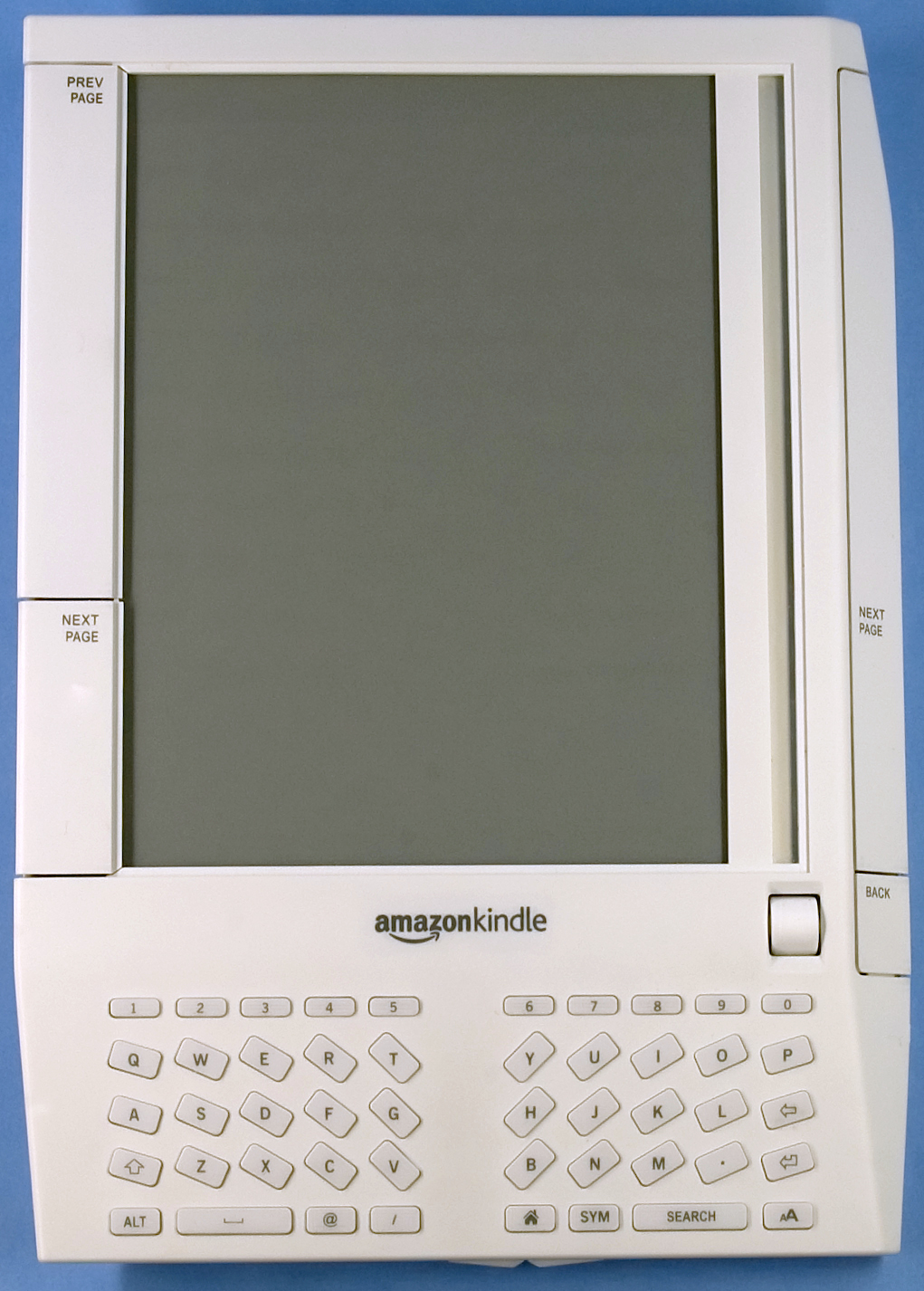
It sold out in five and a half hours and stayed unavailable for months. It looks nothing like a modern Kindle — wedge-shaped, physical keyboard, a scroll wheel running down the side — and it is the device that proved people would actually read books on a screen.
Working units in honest condition are a real find. Check that the battery still holds a charge; most of these are approaching twenty years old.
Barnes & Noble Nook, 1st Edition (2009)
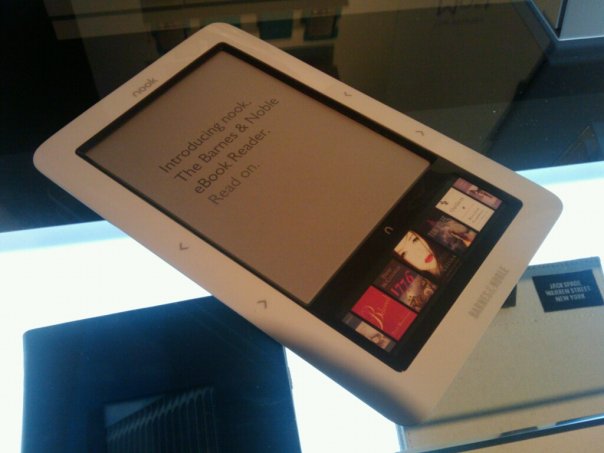
The original Nook paired a standard E Ink screen with a small colour touchscreen strip underneath for navigation. Nothing else looked like it, and Barnes & Noble abandoned the idea within a couple of generations. A genuinely odd piece of design history.
Also worth watching for
A few devices we have already reviewed turn up rarely enough to deserve a mention here, even though they are not headline collector pieces:
- Sony PRS-900 Daily Edition — Sony’s short-lived 7-inch reader. Three listings on eBay US when we last checked.
- PocketBook Ultra (650) — the first E Ink reader with a built-in camera, an idea that went nowhere and never returned.
- PocketBook IQ 701 — an early Android-based e-reader tablet, largely forgotten.
- Sony PRS-505 — still called the best-built e-reader ever made by people who own one. Read our review.
A word on buying used
Batteries are the thing that kills these devices, not screens. Ask sellers directly how long a charge lasts. Photographs of the device powered on, showing text, are worth more than any description — a dead E Ink screen looks perfectly fine in a photograph taken while it is off.