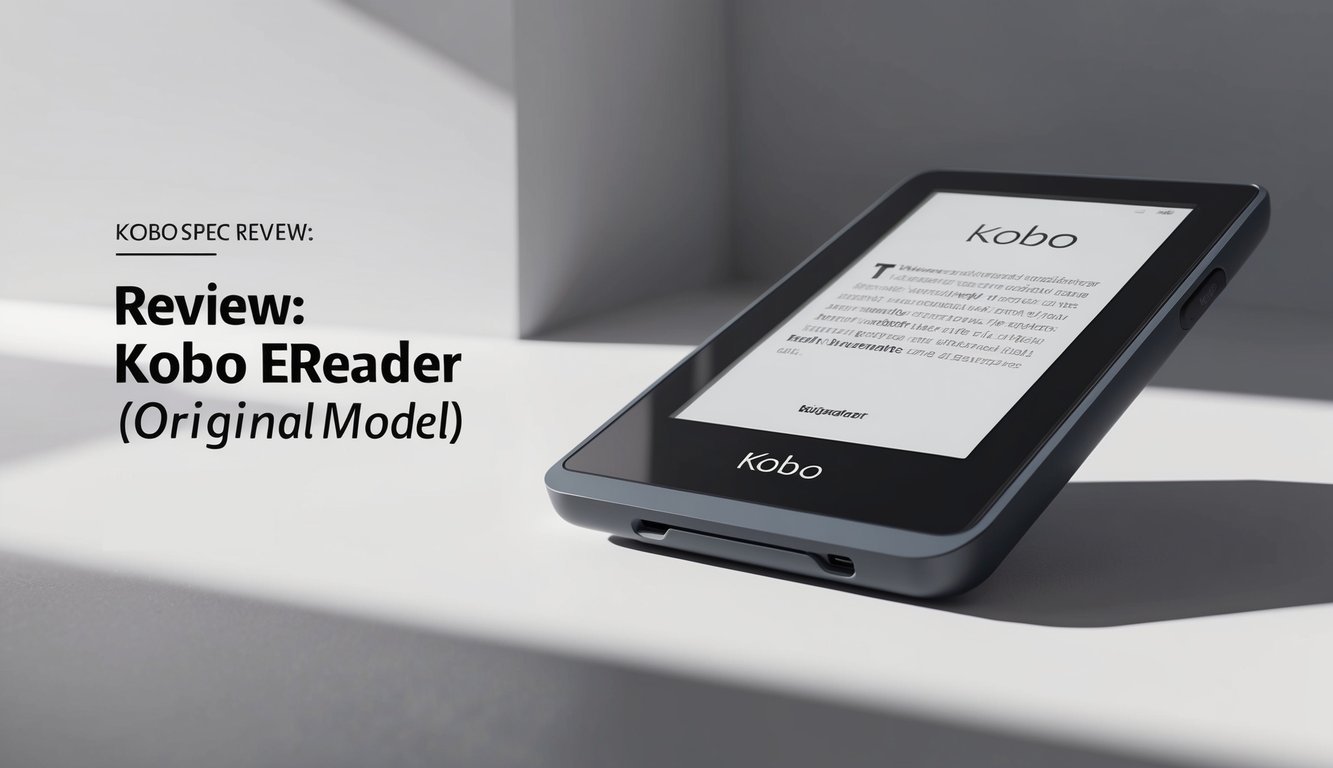
KoboSpec Review: Kobo eReader (Original Model)
Release Date: May 2010
Executive Summary
The original Kobo eReader marked the company’s entry into the e-reader market in 2010. As their first device, it established Kobo’s commitment to accessible digital reading with a straightforward, budget-friendly approach. While basic by today’s standards, it offered solid fundamentals for digital reading enthusiasts.
Display Technology
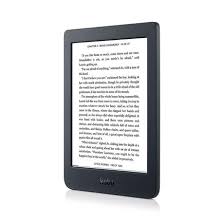
- Screen: 6-inch E Ink Vizplex display
- Resolution: 800 x 600 pixels
- Grayscale: 16 levels
- Screen Features: Non-touch, no backlight
- Reading Experience: Clear visibility in daylight, no eye strain
Technical Specifications
Storage & Memory
- Internal Storage: 1GB
- Book Capacity: ~1,000 eBooks
- Expandability: SD card slot (up to 4GB)
Connectivity
- Data Transfer: USB 2.0
- Wireless: None
- Charging: Via USB connection
Power & Battery
- Battery Type: Rechargeable lithium-ion
- Battery Life: Up to 2 weeks
- Charging Time: ~4 hours from empty
Physical Characteristics
- Dimensions: 184 x 120 x 10 mm
- Weight: 221 grams
- Build: Plastic construction with matte finish
- Button Layout: D-pad navigation with dedicated menu buttons
Software & Features
Reading Capabilities
- Supported Formats: EPUB, PDF
- Navigation: Button-based menu system
- Dictionary: Basic English dictionary lookup
- Reading Life: Basic reading statistics tracking
Content
- Pre-loaded Content: 100 classic eBooks
- Store Access: Via USB transfer only
- Organization: Basic folder structure
Performance Analysis
Strengths
- Value Proposition
- Competitive entry-level pricing
- Included classic literature library
- Expandable storage option
- User Experience
- Simple, intuitive interface
- Lightweight design
- Extended battery life
- Reliability
- Durable construction
- Consistent performance
- Stable software platform
Limitations
- Technical Constraints
- No touchscreen functionality
- Absence of backlight
- Limited file format support
- Connectivity
- No wireless capabilities
- USB-only transfers
- Manual content management required
- Feature Set
- Basic navigation system
- Limited customization options
- No advanced reading features
Market Context
The original Kobo eReader entered the market when Amazon’s Kindle was already established, positioning itself as a more affordable alternative. While lacking some competitive features, it successfully carved out a niche in the budget e-reader segment.
Value Assessment
Price-Performance Ratio
- Competitive pricing for basic e-reading capabilities
- Good value for users focused on essential reading features
- Cost-effective entry point to digital reading
Target Audience
- First-time e-reader users
- Budget-conscious readers
- Users seeking simplicity over advanced features
Final Verdict
Rating: 7/10
The original Kobo eReader successfully delivered on its core promise of making digital reading accessible and affordable. While modest in its feature set, it provided a solid foundation for reading with good battery life and expandable storage. Its limitations are notable but understandable given its pioneer status in Kobo’s lineup.
Recommendation
Recommended for:
- Users seeking a basic, reliable e-reader
- Budget-conscious readers
- Those who prefer simplicity over advanced features
Not recommended for:
- Users requiring wireless connectivity
- Those needing advanced formatting options
- Readers wanting touchscreen interaction
Historical Significance
The original Kobo eReader represents an important milestone in e-reader history, helping to establish Kobo as a significant player in the digital reading market. Its success paved the way for Kobo’s future innovations and more advanced models.